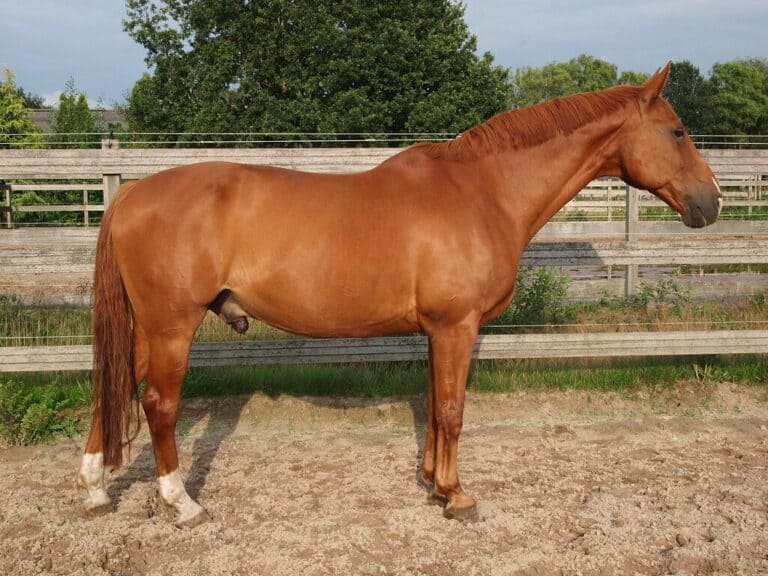
Warmblood
About the Breed
They are a group of athletic sport horses developed primarily in Europe and now used throughout the world for high-level equestrian competition. Rather than representing a single breed, the term “Warmblood” refers to a category of horses bred specifically for rideability, soundness, athleticism, and balanced temperament.
Common registries include the Dutch Warmblood, Hanoverian, Holsteiner, Trakehner, Belgian Warmblood, Swedish Warmblood, and Danish Warmblood.
They combine the size and strength of heavier horses with the agility, sensitivity, and athleticism of lighter horses. This makes them particularly well suited for dressage, show jumping, eventing, hunter competition, and other performance disciplines.
History
Their development began in Europe, where breeders sought to create horses suitable for cavalry, carriage work, agriculture, and later sport. Over time, selective breeding emphasized movement quality, temperament, sound conformation, and performance ability.
Unlike many traditional breeds, their registries function as studbooks that evaluate breeding stock based on conformation, movement, veterinary screening, and competition results rather than ancestry alone.
Today, they dominate many international equestrian disciplines and are among the most sought-after sport horses in the world.
Height
Most stand about 15.2–17 hands tall.
Weight
Most weigh approximately 1,200–1,450 pounds.
Life Expectancy
With proper management, they commonly live 20–30 years.
Overall Health
They are generally strong and athletic, but they can be predisposed to both inherited and sport-related conditions.
Common concerns include:
Warmblood Fragile Foal Syndrome (WFFS)
Osteochondrosis dissecans (OCD)
Gastric ulcers
Joint and tendon injuries
Lameness associated with athletic performance
Hypertrophic musculoskeletal strain
Because many warmbloods are performance horses, long-term soundness depends heavily on correct conformation, careful conditioning, and proper management.
Health Testing They Should Have
DNA parentage verification
Warmblood Fragile Foal Syndrome (WFFS) testing
Registry-specific genetic tests
Pre-breeding reproductive examination
Comprehensive soundness evaluation
Conformation and movement assessment
Breed Traits and Characteristics
They are intelligent, trainable, and highly athletic. They are often described as:
Willing and cooperative
Powerful and expressive
Balanced and rideable
Calm but responsive
Suitable for amateur and professional riders depending on training level
A well-bred warmblood should offer both athletic ability and a stable temperament.
Temperament Ratings
Affectionate with handlers: 8/10
Good for amateurs: 8/10
Trainability: 10/10
Athletic ability: 10/10
Energy level: 8/10
Versatility: 9/10
Maintenance level: 7/10
Hardiness: 8/10
Coat Type
Short, sleek coat typical of most horses.
Colors
Common colors include bay, black, chestnut, gray, brown, and occasionally buckskin, palomino, and tobiano depending on the registry.
Markings
Standard white facial and leg markings are common, but color and markings are generally secondary to performance and conformation.
Breed Standard Snapshot
A quality Warmblood should appear balanced, uphill, and athletic with:
A well-set neck
Strong topline
Deep chest
Powerful hindquarters
Correct limb structure
Elastic, expressive movement
The overall impression should be one of strength, elegance, and athletic ability.
Best For
Dressage
Show jumping
Eventing
Hunters
Combined driving
Upper-level sport competition
Ambitious amateur riders
Exercise Needs
They require regular turnout, structured conditioning, and consistent training to maintain fitness and mental well-being.
Training Needs
This breed is highly trainable and excel under systematic, progressive training. They respond best to consistent handling, correct riding, and thoughtful conditioning.
Special Care Considerations
Monitor joints, tendons, and feet
Maintain a forage-based diet
Use professional saddle fitting
Provide structured conditioning and recovery
Screen breeding stock for WFFS and soundness
Keep detailed health and performance records
What Buyers Should Look For
When purchasing a Warmblood, buyers should evaluate:
Conformation and movement quality
Temperament and rideability
Genetic testing results
Competition history
Veterinary and soundness records
Suitability for the intended discipline
Final Thoughts
This breed is an excellent choice for riders seeking an athletic, trainable, and versatile partner capable of excelling in dressage, jumping, eventing, and many other competitive and recreational disciplines.
Breed Resources