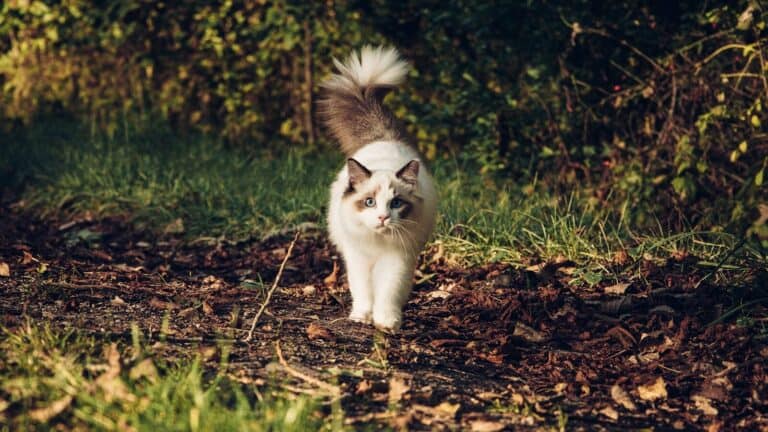
Ragdoll
About the Breed
The Ragdoll is a large, affectionate cat breed known for its striking blue eyes, semi-long silky coat, and exceptionally gentle temperament. The breed is famous for its relaxed, trusting nature and its tendency to go limp when picked up, which inspired the name “Ragdoll.”
These cats are among the most people-oriented cat breeds. They form deep bonds with their families and often follow their owners from room to room, greeting them at the door and seeking out companionship throughout the day. Their calm and easygoing personality makes them one of the most popular choices for families, seniors, and households with children and other pets.
Although they are large cats, they are generally soft-spoken and affectionate rather than dominant or demanding. They thrive indoors and are best suited to homes where they receive plenty of attention and companionship.
History
This breed was developed in California during the 1960s by breeder Ann Baker. The breed was selectively developed for its docile temperament, large size, luxurious coat, and striking pointed coloration.
Over time, they have became widely admired for its beautiful appearance and exceptionally sweet disposition. Today, it is one of the most popular pedigree cat breeds in the world.
Height
Most stand about 9–11 inches tall at the shoulder.
Weight
Females generally weigh 10–15 pounds.
Males commonly weigh 15–20 pounds or more.
Life Expectancy
About 12–17 years is commonly cited, and many live long, healthy lives with proper veterinary care and nutrition.
Overall Health
These cats are generally healthy, but they can be predisposed to several inherited and acquired conditions.
Common concerns include:
Hypertrophic cardiomyopathy (HCM)
Bladder stones and urinary tract issues
Obesity
Dental disease
Joint stress due to large size
Responsible breeders use DNA testing and cardiac screening to reduce the risk of inherited disease.
Health Testing They Should Have
DNA testing for hypertrophic cardiomyopathy
Cardiac screening and echocardiography when indicated
Routine veterinary examinations
Urinary health monitoring
Regular dental evaluations
Genetic testing recommended by the breeder
Breed Traits and Characteristics
They are affectionate, gentle, and highly social cats. They are known for their calm demeanor and strong desire to be close to their families.
They are often described as:
Docile and easygoing
Friendly and trusting
Quiet and soft-spoken
Patient with children
Good with other pets
Many enjoy being held, cuddled, and carried, and they frequently seek out lap time and close physical contact.
Temperament Ratings
Affectionate with family: 10/10
Good with children: 10/10
Good with other pets: 10/10
Shedding level: 6/10
Watchfulness: 3/10
Energy level: 5/10
Grooming frequency: 5/10
Vocalization: 4/10
Coat Type
The Ragdoll has a semi-long, silky coat with minimal undercoat, which tends to mat less than many other long-haired breeds.
Colors
Recognized colors include seal, blue, chocolate, lilac, cream, and red.
Markings
Ragdolls come in three primary patterns:
Colorpoint
Mitted
Bicolor
Additional lynx and tortie variations are also recognized.
Breed Standard Snapshot
The Ragdoll should appear large, balanced, and substantial with:
A broad wedge-shaped head
Large oval blue eyes
Strong body and heavy bone
Semi-long silky coat
Long plumed tail
A gentle and relaxed expression
The overall impression should be one of beauty, substance, and sweetness.
Exercise Needs
Ragdolls have moderate exercise needs. They enjoy interactive toys, climbing structures, and daily play, but they are generally calmer than many active breeds.
Training Needs
Ragdolls are intelligent and highly trainable. Many can learn:
Their name
Fetch
Clicker training
Harness walking
Simple tricks
They respond very well to positive reinforcement and gentle, consistent handling.
Special Care Considerations
Maintain healthy body weight
Provide routine cardiac and urinary monitoring
Brush the coat several times per week
Offer daily companionship and interaction
Keep indoors for safety
Schedule regular dental care
Breed Resources